
Laser lithotripsy for urinary stones
Fragmenting kidney stones with a laser, without incision
Holmium/Thulium laser lithotripsy offers an effective treatment for urinary stones without incision. Consult Dr. Sébastien Dominique, urologist in Paris.
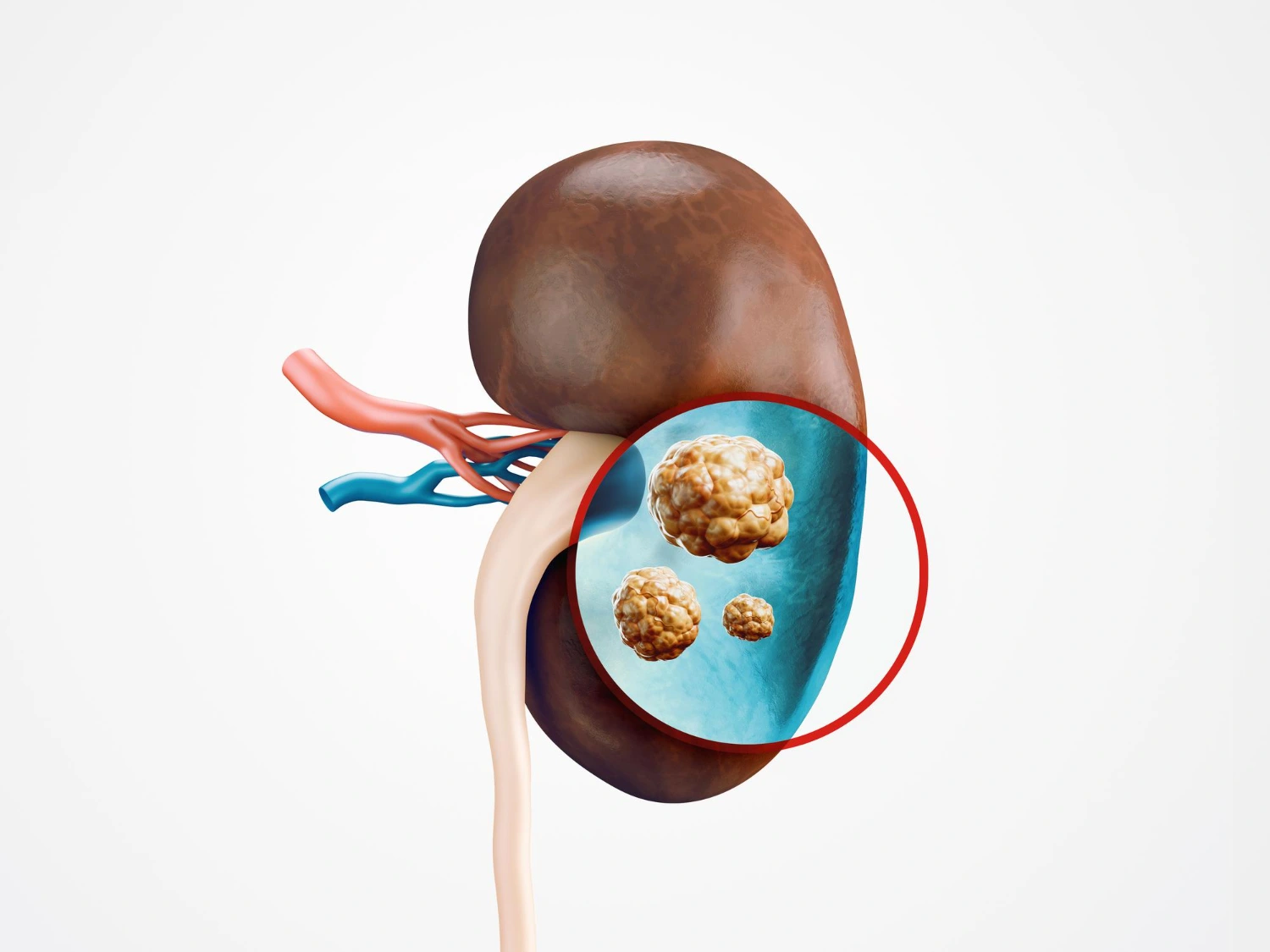
A minimally invasive solution for the treatment of urinary stones
Laser lithotripsy is currently one of the most effective and least invasive techniques for treating urinary stones (or urolithiasis), whether located in the kidney , ureter , or bladder . This method allows for the fragmentation of stones with a laser , without incision, without scarring , and with a rapid recovery. Dr. Sébastien Dominique , a urologist in Paris, uses the most advanced laser technologies (Holmium and Thulium) in the treatment of stones, for personalized , safe , and effective care.
What is laser lithotripsy?
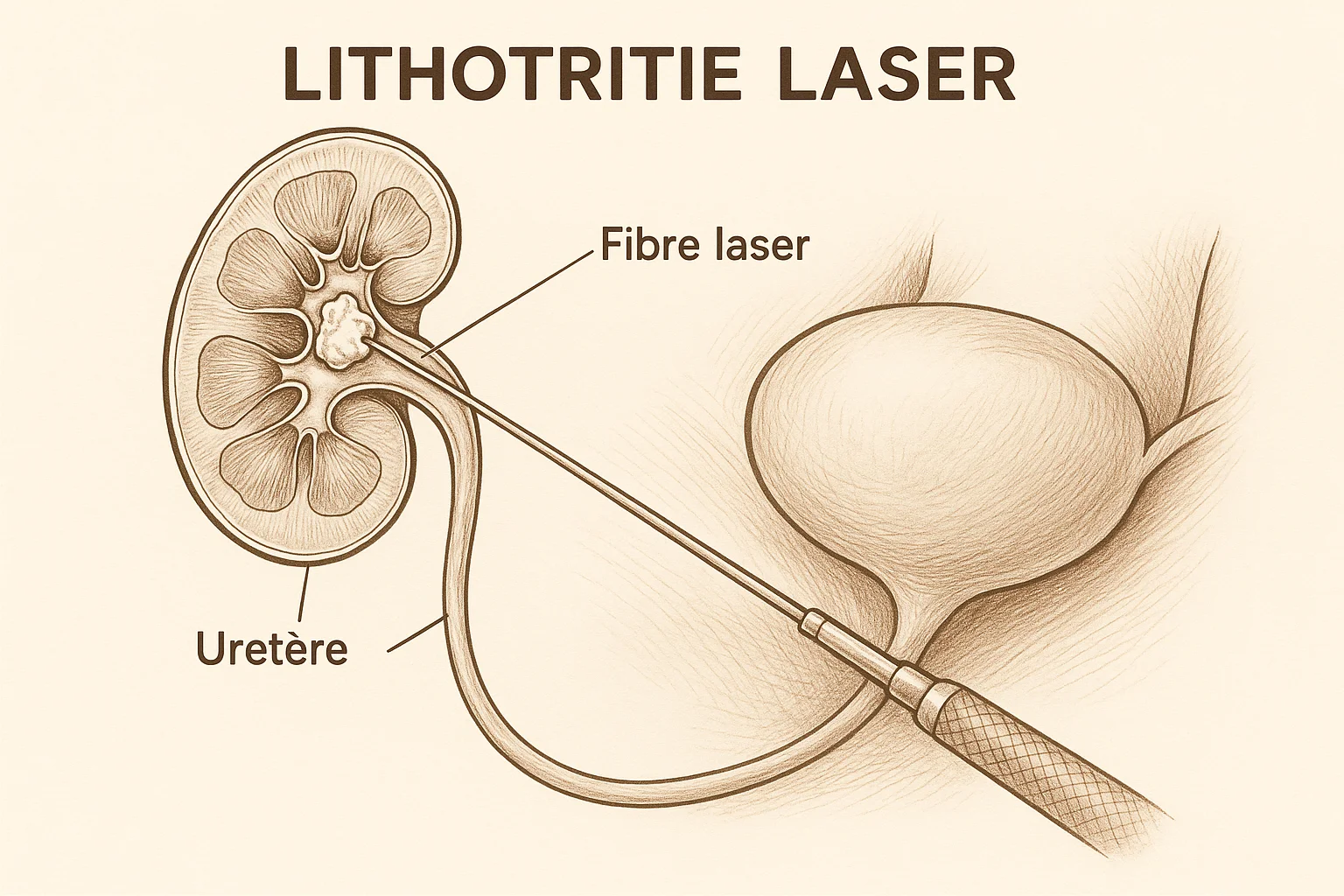
Laser lithotripsy involves introducing a miniature camera (ureteroscope or nephroscope) into the urinary tract, through the natural pathways (urethra, bladder, ureter), up to the stone.
- A laser fiber is then used to pulverize or fragment the calculus .
- The fragments are either eliminated naturally through urine, or extracted using forceps or endoscopic baskets.
- This is a treatment without surgical incision . No stitches or visible scarring.
Indications
Laser lithotripsy is indicated in several situations:
- Symptomatic kidney or ureteral stones (pain, renal colic, obstruction)
- Failure of medical treatment or spontaneous expulsion
- Calculations too large to be eliminated on their own (generally > 6 mm)
- Recurrent kidney stones
- Contraindication to extracorporeal shock wave lithotripsy (ESWL)
- Bladder stones accessible endoscopically
Holmium and Thulium Lasers: Two Complementary Technologies
The Holmium:YAG laser is the most widely used in urology for stone fragmentation. It is effective on all types of stones (hard, soft, mixed), regardless of their location. It allows for a choice between:
- Fragmentation (into easily extracted pieces)
- Dusting : spraying into a fine dust that is naturally eliminated.
The Thulium laser (a newer technology) offers increased precision , better thermal control , and reduced bleeding . It is sometimes used depending on the surgeon’s preferences and the characteristics of the stone.
Procedure of the intervention
- Performed under general anesthesia (outpatient or short hospital stay)
- Introduction of a flexible or rigid endoscope through the natural openings
- Direct visualization of the calculation on screen
- Holmium or Thulium laser fragmentation
- Extraction of fragments if necessary
- Possible placement of a ureteral stent (double J) to facilitate drainage
Average duration of the procedure: 30 to 90 minutes , depending on the number, size and location of the stones.
Advantages of laser lithotripsy
Minimally invasive technique , without incision or scarring. Treatment possible for all types of kidney stones. Access to difficult areas (renal calyces, upper ureter) thanks to the flexible endoscope . Rapid recovery , little or no postoperative pain. Excellent results with very high success rates. Fewer complications compared to open or percutaneous surgery.
Expertise
Academic background

Prevention and post-operative care
Post-operative care
- Release on the same day or the following day, depending on the circumstances
- Resumption of activities possible in 2 to 5 days
- Monitor for possible moderate pain or the presence of blood in the urine (transient).
- A double J tube can be left in place for a few days to a few weeks to prevent secondary pain or colic.
- A post-operative check-up (imaging + consultation) is systematically arranged to verify the absence of residual fragments and prevent recurrence.
Prevention of recurrence: After lithotripsy, a metabolic assessment may be recommended to understand the origin of the stones:
-
- Blood test (calcium, uric acid…)
- 24-hour urine analysis
- Dietary and hydration recommendations
- Preventive treatment if necessary
Experience
Ureteral stone: extraction using a basket without scarring (uncensored) – Dr. Dominique
Specialist in laser lithotripsy
My review in video
Discover the career path of the practice through this video.
Make an appointment
Dr. Sébastien Dominique offers you a personalized assessment.
FAQ – Frequently Asked Questions
What is laser lithotripsy?
This involves the fragmentation of urinary stones using a Holmium laser, inserted through the natural orifices during a ureteroscopy. The laser pulverizes the stone into fragments or dust, which are either eliminated naturally or extracted simultaneously.
What calculations can be processed using a laser?
Virtually all types of stones can be treated: ureteral and kidney stones, regardless of their hardness. The technique is particularly well-suited to stones smaller than 2 cm; for larger stones, several sessions or a percutaneous approach may be considered.
How does the procedure unfold?
The procedure is performed under general anesthesia, most often on an outpatient basis, without any incision. A JJ stent is sometimes left in place for a few days to protect the kidney while the fragments are being removed.
What are the usual consequences?
Burning during urination, pinkish urine, and discomfort related to the JJ stent are common and temporary. Normal activities can be resumed within a few days. A follow-up imaging scan then confirms the absence of any residual fragments.
Dr Sébastien Dominique's expertise
Chirurgien Urologue à Paris

Laser lithotripsy for urinary stones: there are solutions.