
Kidney stones
Identify, treat and prevent recurrence
Discover the causes, symptoms, treatments and prevention solutions for kidney stones, explained by Dr. Dominique, a specialist in urology.
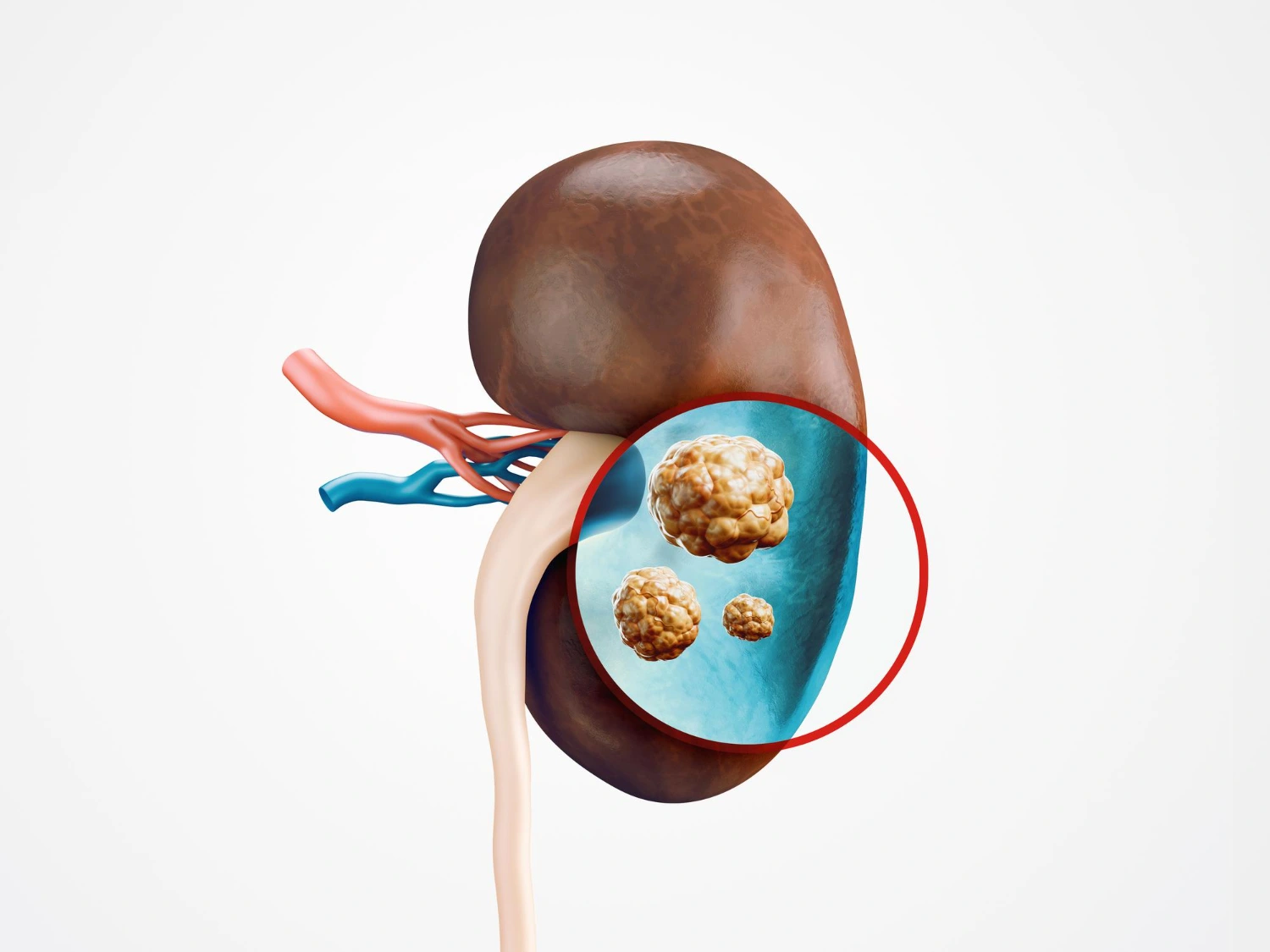
Introduction
Kidney stones are small crystals or stones that form directly in the kidneys . They can remain asymptomatic for a long time or become very painful when they move or migrate into the ureter. Dr. Dominique specializes in the comprehensive management of kidney stones: accurate diagnosis , minimally invasive treatments , and prevention of recurrence . In cases of severe lower back pain, fever, or blood in the urine, an urgent consultation is recommended to avoid complications (infection, obstruction, kidney damage).
Symptoms and warning signs
Expertise in recurrent kidney stones
Diagnosis
Care and treatment
Expertise
Kidney stones: how to manage your calcium intake?

Prevention of recurrence (kidney stones)
Prevention is essential, as kidney stones have a high potential for recurrence .
- Complete metabolic assessment
To analyze risk factors: calciuria, oxaluria, uricosuria, urinary pH, etc.
- Dietary advice
– Drink ≥ 1.5–2 L of water/day – Reduce salt intake – Moderate animal protein intake – Limit foods rich in oxalates (depending on the type of calculation) – Have a regular intake of calcium (neither excessive nor too low)
- Specific treatment depending on the type of calculation
(citrates, thiazides, allopurinol, etc.)
- Regular monitoring
Imaging + urological consultation to check for any changes or new formations.
Why consult a specialist urologist?
Experience
Kidney stones: should animal protein be limited?

How to prevent the recurrence of urinary stones?
In this video, I explain how to effectively reduce the risk of recurring kidney stones. I share essential daily habits to adopt, mistakes to avoid, and the importance of a metabolic assessment to understand the origin of your stones. My goal: to help you prevent another attack and protect your kidney health in the long term.
Do you suffer from kidney stones?
Dr. Sébastien Dominique provides emergency care for kidney stone attacks and ensures comprehensive follow-up to prevent recurrence. Urology Practice Paris Opéra – Paris 17th Arrondissement. Consultations available in person or via teleconsultation. Book your appointment today.
FAQ – Frequently Asked Questions
Should a kidney stone discovered by chance be treated?
Not always. A small, silent kidney stone can often be monitored simply by imaging. Treatment is considered if it grows, becomes painful, gets infected or obstructs the urinary tract, or for certain high-risk professions.
What is the difference between a kidney stone and a ureteral stone?
A kidney stone is located in the cavities of the kidney, where it is often painless. It is its migration into the ureter — the tube connecting the kidney to the bladder — that causes renal colic by blocking the flow of urine.
How are large kidney stones treated?
Stones larger than 2 cm, particularly staghorn calculi, are treated with percutaneous nephrolithotomy (PCNL): the stone is fragmented and extracted through a small incision in the skin of the back. Flexible laser ureteroscopy is a multi-stage alternative in some cases.
Why analyze the calculation after it has been extracted?
The composition of the kidney stone (calcium oxalate, uric acid, struvite, cystine, etc.) guides preventive measures: dietary adjustments, urine alkalinization, or specific treatment. This is key to preventing recurrence.
Dr Sébastien Dominique's expertise
Chirurgien Urologue à Paris

Kidney stones: there are solutions.